
INDIA · TOMATO FARMING
Irrigation: 18% Lower Reported Water Use
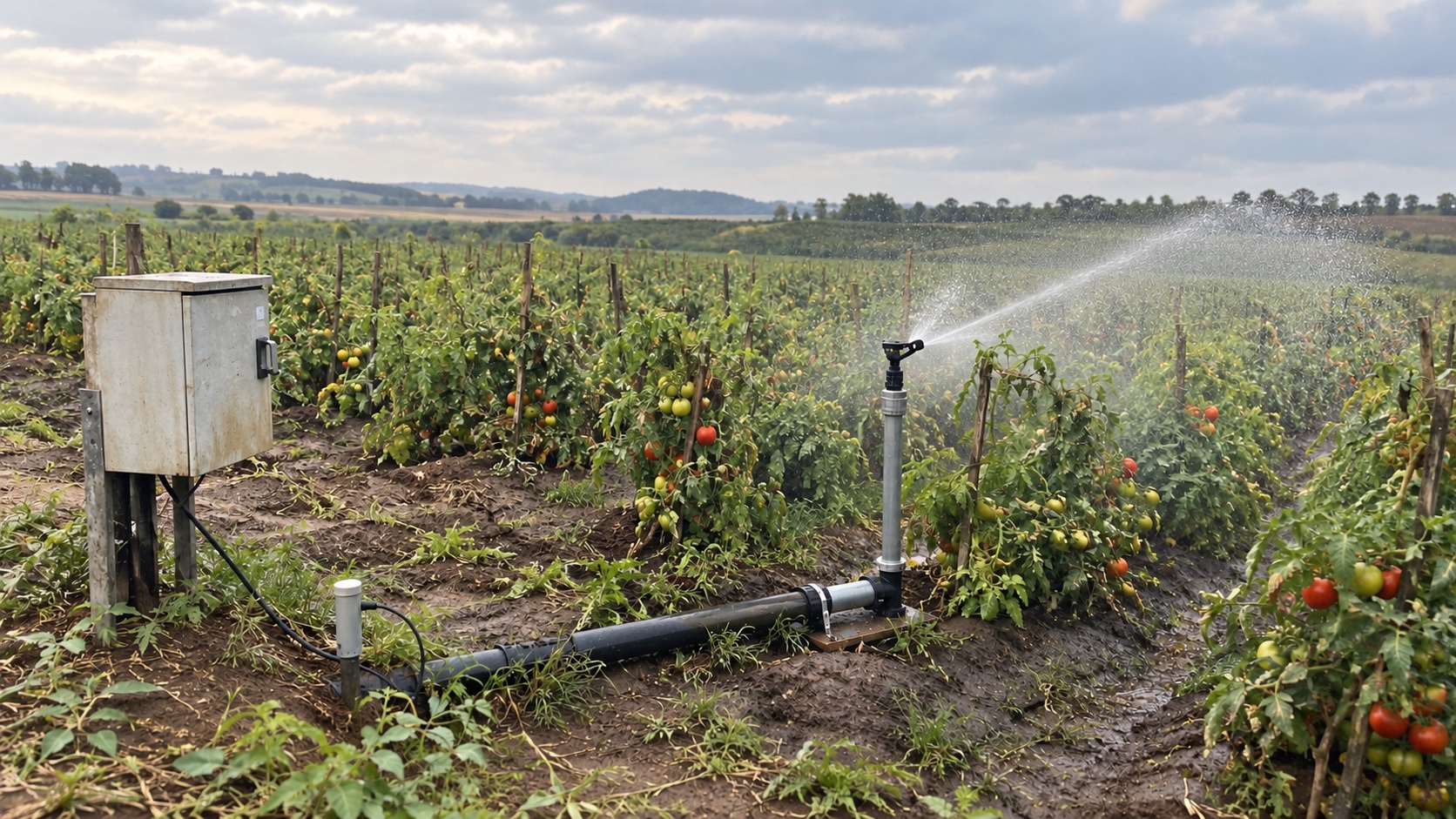
Irrigation across 700 hectares was automated using two SMART S-2433 controllers, 32 wired soil sensors and local logic built with Complex Events.
A tomato farmer replaced routine manual irrigation starts with soil-moisture-based control. Over nine months, the farmer reported 18% less water use. The system operated locally, without an internet connection or monitoring platform, while SMS alerts directed attention to critical soil conditions.
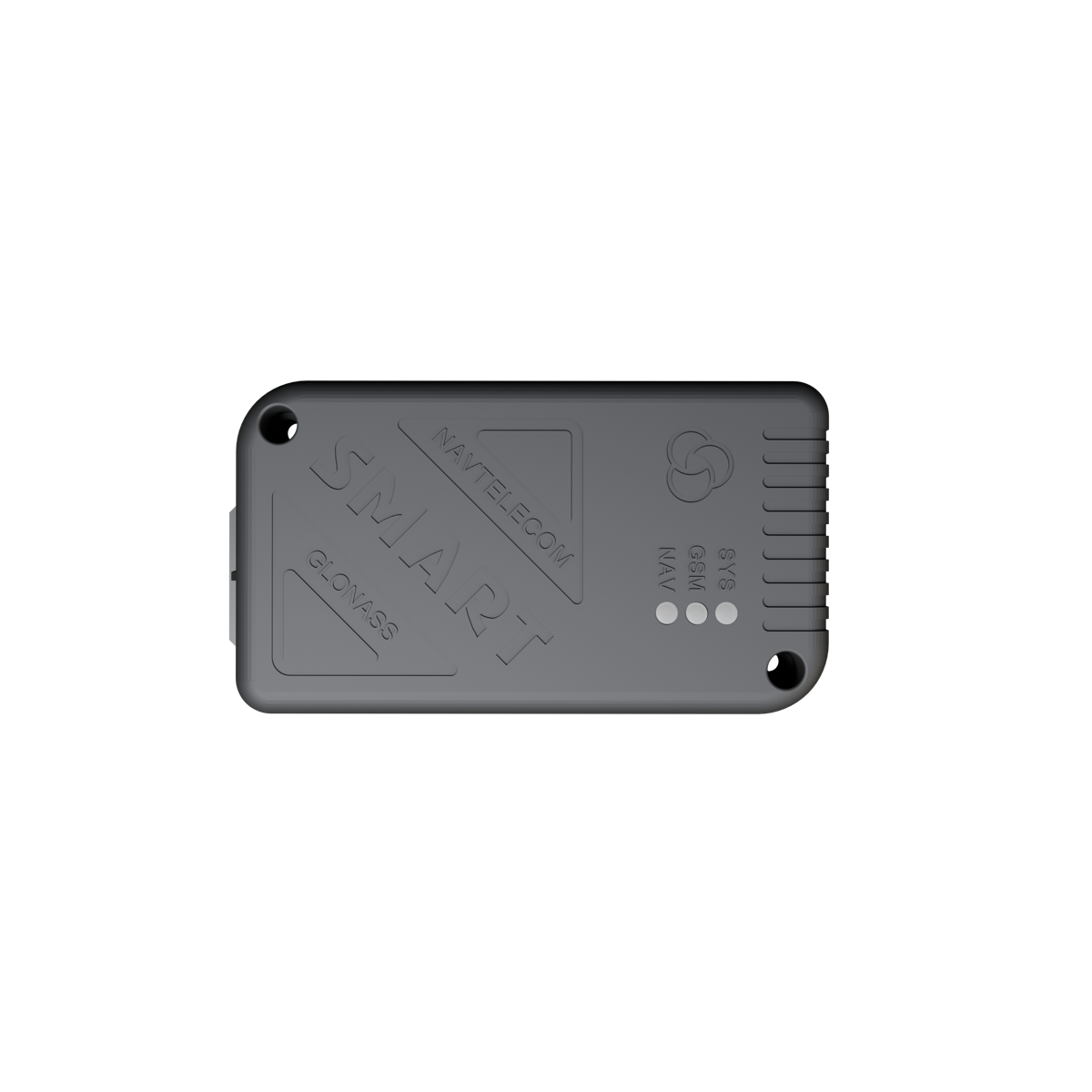
Solution device
SMART S-2433- Market
- India
- Automated area
- 700 hectares32 soil sensors Two controllers
- Application
- Tomato farmingReporting period: nine months
THE CHALLENGE
Water when the soil needs it — not when someone is available
Manual checks took time and gave the farmer an incomplete picture of moisture below the soil surface. Irrigation depended on someone inspecting conditions and starting the system. That made it difficult to respond consistently as soil dried, while unnecessary watering consumed water and pumping energy.
The farmer needed watering to start when the monitored soil required it and a clear alert when conditions needed inspection. Internet access and a hosted monitoring service were not prerequisites the farm could rely on.
HOW THE IRRIGATION DECISION CHANGED
Soil readings → local decision → timed watering
Read the soil. Average each sensor group.
Each S-2433 acted as a stationary controller connected to 16 wired Modbus RTU sensors. The installation read soil moisture and electrical conductivity (EC) from each sensor. Complex Events processed the readings locally and calculated the average for each controller’s sensor group. The 32 sensors provided sampling points on the 700-hectare farm. Group averages guided the associated irrigation areas; they did not establish uniform moisture across every hectare. Individual dry patches still required field inspection and representative sensor placement.
Start watering when the soil dries
When average moisture reached the configured 40% start threshold as the soil dried, the controller activated its output and the relay connected to the sprinkler system’s control circuit. The farmer no longer had to attend each routine irrigation start. The relay controlled the irrigation control circuit, not the pump’s power circuit directly.
End the cycle after 15 minutes
After 15 minutes, the controller deactivated the output, ending the watering cycle. Moisture readings continued to be checked. The project used a 40% start threshold and a 30% critical alert threshold on its configured moisture scale. These are installation settings, not general recommendations for tomato irrigation. Their meaning depends on the sensor calibration and soil conditions.
Keep the control decision local
Reading sensors, applying the rules and controlling irrigation took place inside the devices. Loss of cellular coverage did not remove the need-based control logic. SMS delivery still depended on cellular service, and local control still required power, working sensors and a functioning irrigation system.
ALERTS THAT LEAD TO A DEFINED ACTION
Know when to inspect — and what to check
Critical drying
If average moisture fell below the 30% critical setting, the controller generated an SMS. The farmer checked water availability, the irrigation equipment and the soil readings. The alert identified a moisture problem; it did not diagnose a failed pump or confirm that water had flowed.
Changes in soil conductivity
Two configured lower EC thresholds generated warning and priority alerts. These prompted review of recent irrigation, sensor condition and soil conditions, with sampling or agronomic advice before changing fertilizer application. EC reflects soluble salts and is also influenced by moisture and temperature; a low reading alone does not establish nutrient deficiency.
RESULTS OVER NINE MONTHS
18% less water use, reported by the farmer
WATER CONSUMPTION
18% reduction
Water use fell to 82% of the comparison baseline. The farmer reported this reduction over nine months of operation. ELECTRICITY
Lower use reported
The farmer also reported lower electricity use. Pumping-energy savings were not quantified and should not be equated with the water-saving percentage. ROUTINE STARTS
Automated locally
Less reliance on routine manual irrigation starts. The farmer could focus field visits on moisture and EC alerts instead of attending each routine irrigation start.
How to interpret these results
The 18% figure is the farmer’s reported outcome. Baseline water volumes and adjustments for rainfall, crop stage and irrigated area were not supplied. It is not presented as a controlled measurement of the automation’s isolated effect or extrapolated into annual savings.
WHY SMART S-2433
Water when needed without attending every start
S-2433 let the farmer turn soil readings into a watering cycle without travelling to the equipment to start it. The cycle ended after the configured time, and alerts directed attention to conditions needing a field check.
This suited a farm that could not depend on internet access for routine control. The watering decision stayed at the installation, while the farmer could focus on exceptions instead of approving every cycle.
SMART S-2433
YOUR PROJECT
Tell us about the work you need to measure
Share the vehicles, routes, sensors and decisions you want this data to support.
More in this application
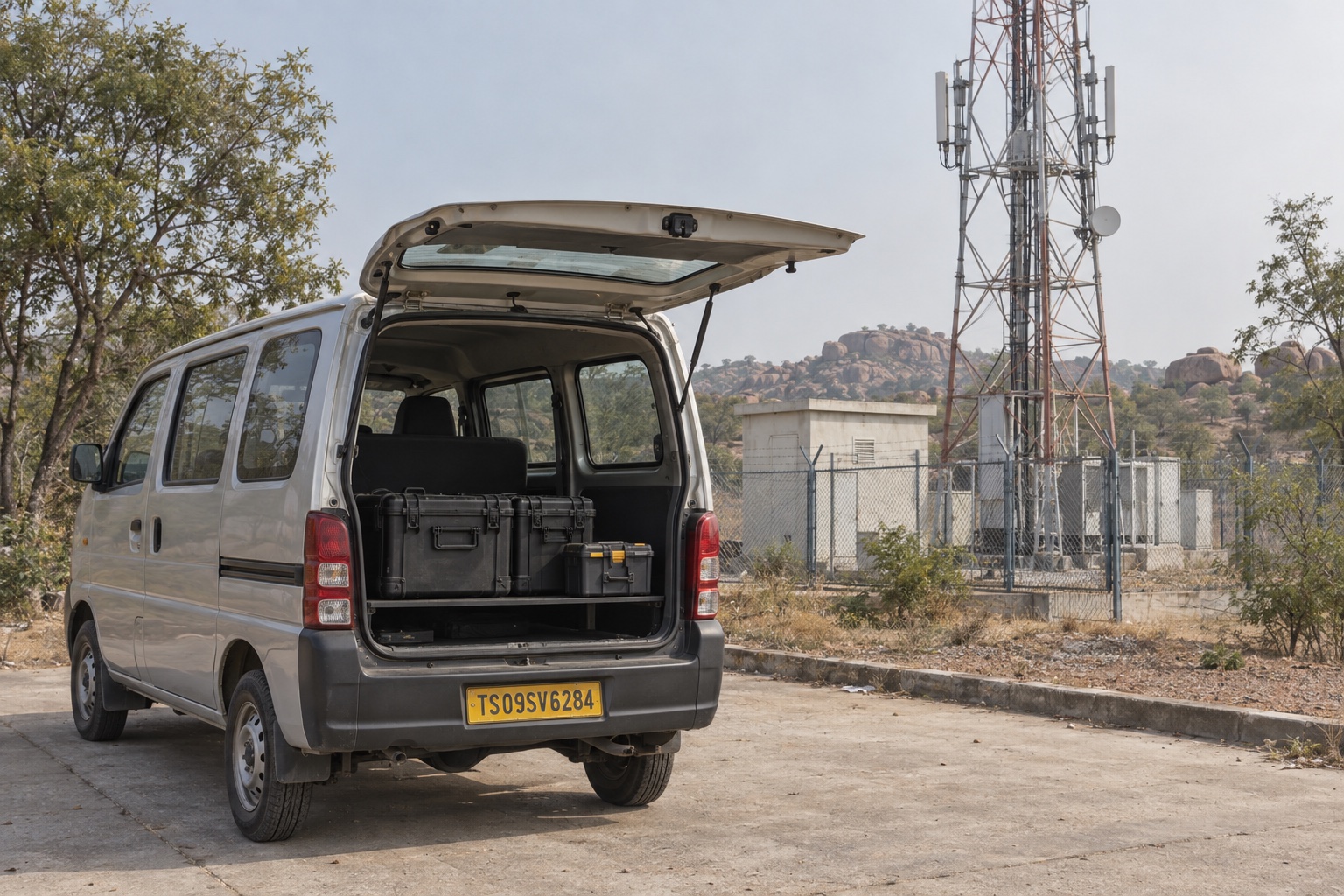
India · SMART S-2433
Tool-Check Warnings in Hyderabad
Six service vans. BLE equipment tags and adapted Complex Events logic prompt in-cab checks, while technician and service-visit records provide a starting point for recovery.
Explore use case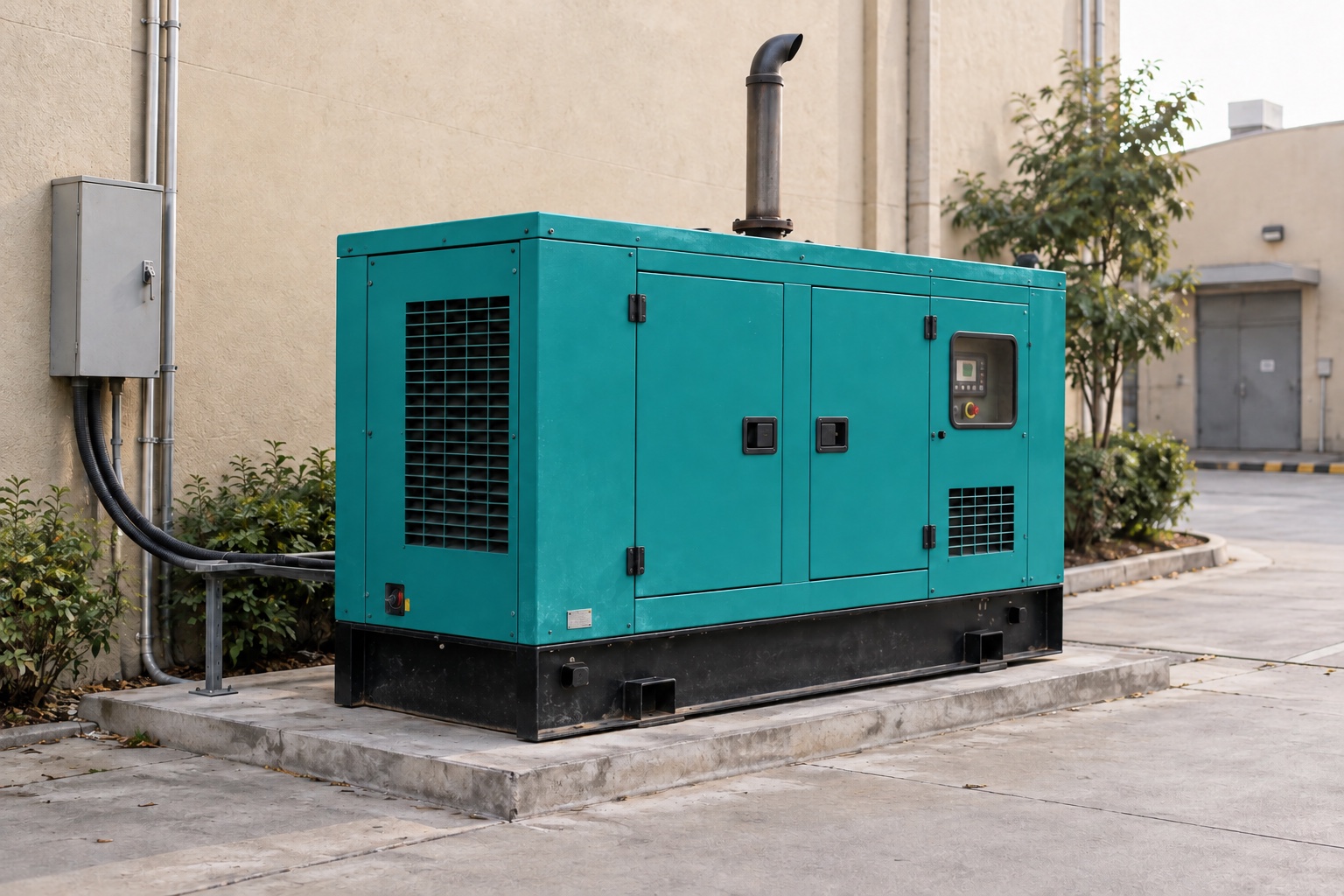
India · START S-2011
Paid Generator Rental Periods in Gurugram
Online rental extensions trigger remote restriction or release, while voltage-based operating-hour records support usage reviews across 28 generators.
Explore use case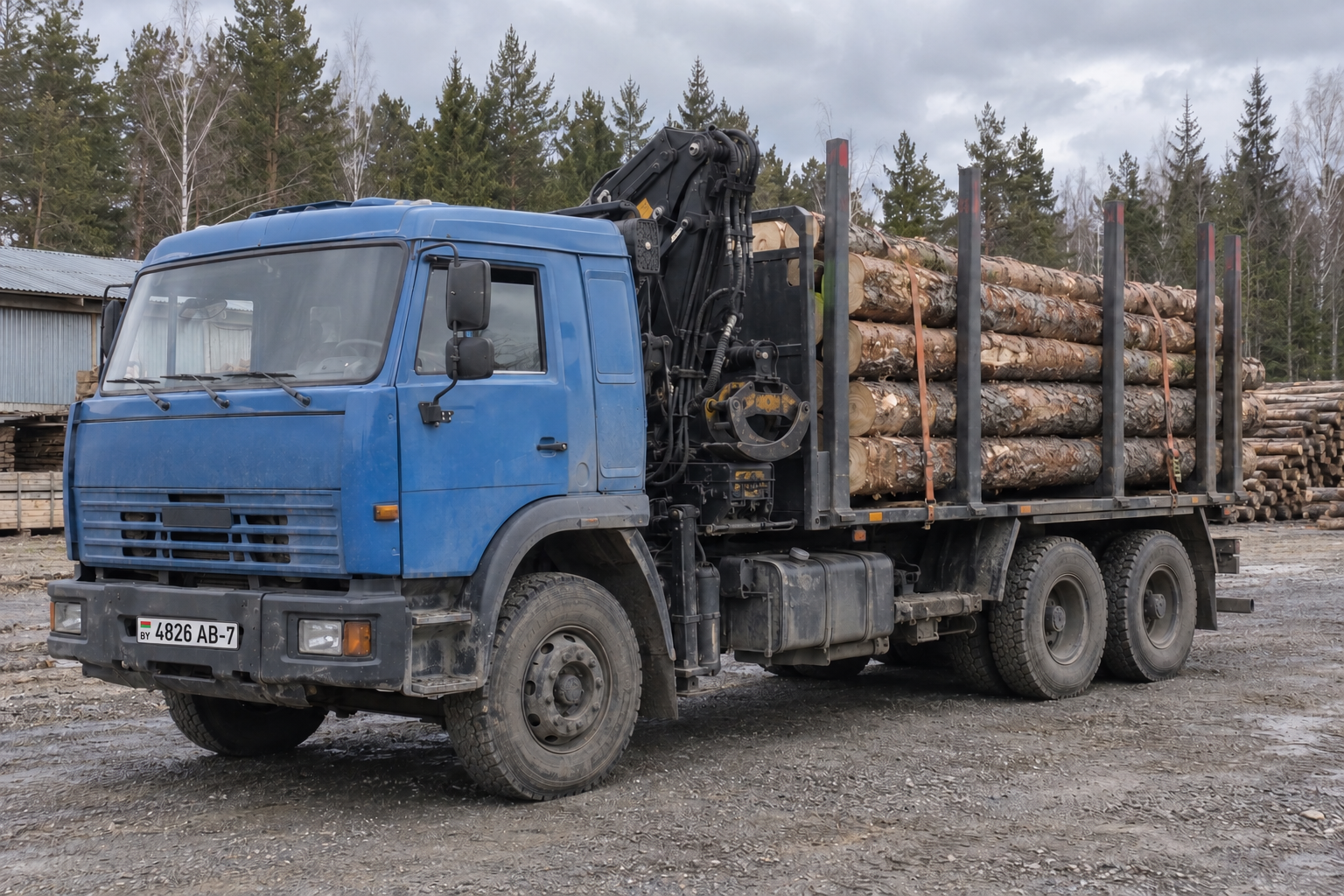
Belarus · SMART S-4511
Timber-Truck Access and Operations in Minsk
Pilot on 10 timber trucks in Minsk, Belarus. Driver authorisation controls starting, equipment-position signals trigger a separate warning, and fuel records support investigation of specific parked events.
Explore use case